

472 Views
Customer support has changed a lot in the last few years, but in many companies the daily reality still feels the same. Long queues, repeated questions, and agents switching between tools just to resolve a single issue.
An AI customer service assistant steps into this gap quietly. It does not replace the support team. It simply handles the repetitive, predictable parts of the job so humans can focus on what actually needs thinking.
And once it is set up properly, it feels less like “new technology” and more like things finally running in a smoother rhythm.
Understanding What an AI Customer Service Assistant Actually Does
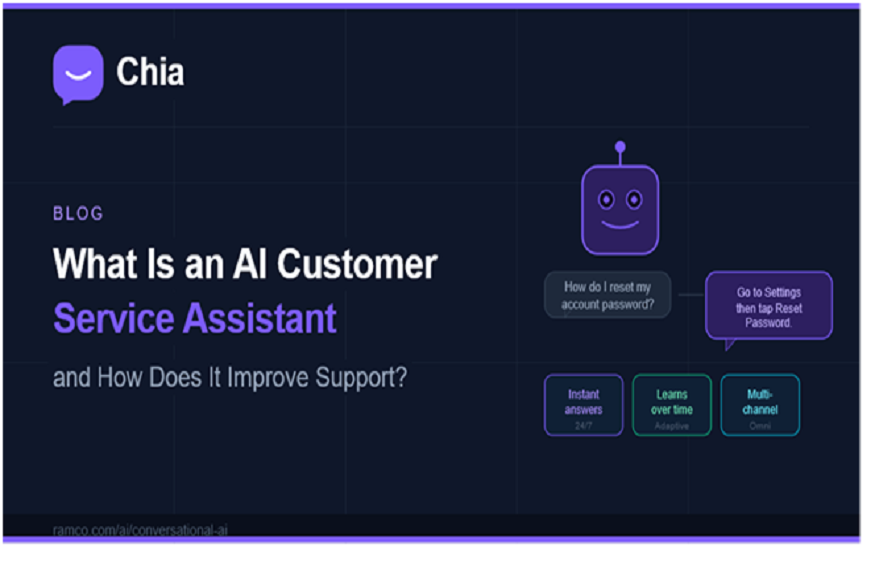
At its core, an AI customer service assistant is a digital layer that helps manage customer conversations. It understands queries, responds instantly, and can even guide users through simple issues without human involvement.
But the real value is not just answering questions. It is how it reduces the load on support teams.
Read More: Streamlining Success: Integrating LinkedIn Lead Gen Forms with Your CR
Instead of every query reaching a human agent, the assistant filters and resolves what it can. Only the more complex issues get escalated.
This small shift changes how support teams operate day to day.
Why Traditional Support Feels Slower as Volume Increases
Most support systems were not designed for today’s pace of interaction. Customers expect instant replies, but internal processes often still depend on manual handling.
That mismatch creates delays, even when teams are working hard.
Here is what usually slows things down:
- Repetitive questions handled manually every time
- Agents switching between multiple systems to find answers
- Inconsistent response times during peak hours
- Growing ticket queues without proper prioritisation
The issue is not effort. It is structure. Without automation, everything depends on human bandwidth.
How AI Virtual Customer Assistants Improve Response Time
An AI virtual customer assistant changes the starting point of every interaction. Instead of a ticket immediately reaching an agent, it is first handled by the assistant.
If the query is simple, it is resolved instantly. If not, it is passed on with context already attached.
This removes one entire step from the support journey.
The impact is usually noticeable very quickly:
- Faster first response times
- Reduced backlog of simple queries
- Less pressure on frontline support agents
- More consistent customer experience
It is not about replacing conversations. It is about removing unnecessary waiting.
AI Helpdesk Assistants That Reduce Repetitive Workload
One of the biggest challenges in support teams is repetition. The same questions appear again and again, just phrased slightly differently.
An AI helpdesk assistant handles this layer automatically. It recognizes intent, not just exact wording, which means it can respond even when customers phrase things differently.
This gives support teams a bit of breathing space.
Instead of repeating the same instructions all day, agents can focus on cases that need real investigation or decision-making.
Over time, this improves both productivity and morale inside the team.
Intelligent Support Assistants That Keep Conversations Context-Aware
A common frustration in customer support is repetition. Customers often have to explain the same issue multiple times.
An intelligent support assistant avoids this by maintaining context across interactions. It remembers what the conversation is about and continues from where it left off.
This creates a more natural flow in communication.
Customers don’t feel like they are starting over every time, and agents don’t have to rebuild context from scratch.
It is a small change in behaviour, but it makes interactions feel much more connected.
Digital Service Assistants and Smarter Customer Interaction
A digital service assistant does more than respond. It becomes part of the interaction layer between customers and the business.
It can guide users, suggest solutions, and even pull information from connected systems when needed.
For example, instead of saying “your request is in progress,” it can actually show real-time status updates.
That level of clarity reduces confusion and improves trust in the system.
It also reduces unnecessary follow-ups, which helps keep support queues cleaner.
Where Ramco Fits Into This Support Evolution
Choosing the right platform matters because not all systems handle both automation and context well.
Solutions like Ramco Conversational AI are built to bridge that gap.
It combines conversational capability with backend integration so the assistant is not just answering questions but actually connected to real business data.
It helps businesses:
- Automate repetitive customer interactions
- Provide context-aware responses across channels
- Connect support workflows with enterprise systems
- Reduce dependency on manual ticket handling
Instead of acting as a simple chatbot layer, it functions as a connected support assistant that fits into existing operations.
Conclusion
An AI customer service assistant is not just a tool for faster replies. It is a way to reduce unnecessary effort inside support operations while improving consistency for customers.
Read More: What are the top strategies hoteliers should know for success?
When implemented properly, it removes repetitive work, improves response time, and helps teams focus on conversations that actually need human input.
Platforms like Ramco Conversational AI make this shift easier by combining automation with real system integration.
In the end, the goal is not just efficiency. It is making support feel less reactive and more naturally responsive, without adding pressure on the people behind it.